FREE SHIPPING ON ALL ITEMS • PRICES ARE IN $AUD
Inside Queer Slang: A Guide to LGBTQIA+ Language & Culture
From shade and tea to chosen family and camp, explore the meaning behind queer slang words and where they came from. A fun, respectful guide to LGBTQIA+ language and culture.
QUEER LANGUAGE & SLANGLGBTQIA+LGBT EDUCATION & AWARENESSFLAMINGAY GUIDES
Troy Ware | Flamingay.com
2/1/20264 min read
Inside Queer Slang
A fun guide to the words we use — and where they came from
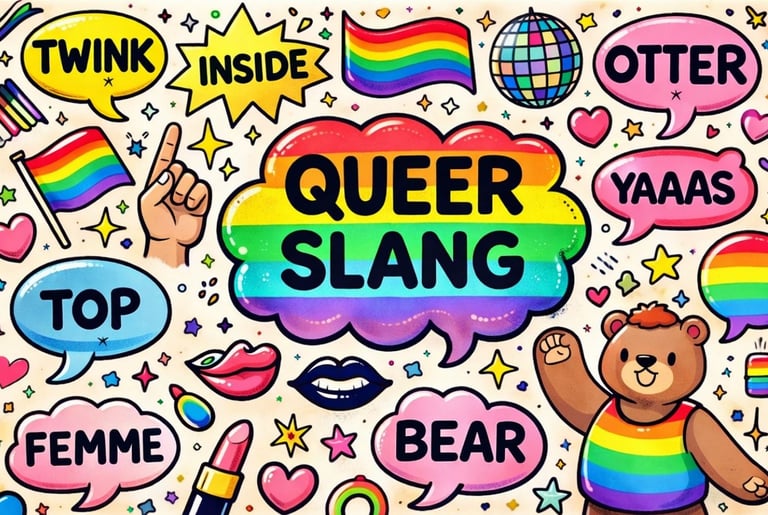
Queer slang isn’t just playful language — it’s history, humour, resistance and community wrapped up in a few perfectly chosen words. Many of these terms were born in ballroom culture, drag spaces, and queer nightlife long before they made their way into mainstream TV, social media and everyday conversation.
This guide breaks down commonly used queer slang — what it means, where it came from, and how it’s actually used today. Think of it as a friendly decoder, not a rulebook
🎭 Ballroom & Drag Culture Origins
A lot of what the world casually says today was perfected in queer spaces decades ago.
Shade
Meaning: A subtle (or not-so-subtle) insult delivered with style
How it’s used: "I’m not saying her outfit was bad… but it was a choice.”
That’s shade.
Read / Reading
Meaning: Calling someone out — accurately
How it’s used: “She kept interrupting, so I read her.”
Pointed, honest, sometimes playful — sometimes ruthless.
Read for filth
Meaning: A no-holds-barred read
How it’s used: “He spilled my drink and blamed me. I read him for filth.”
Serving / Serve
Meaning: Delivering a look, vibe or moment flawlessly
How it’s used: “She’s serving confidence tonight.”
Realness
Meaning: Convincingly embodying a look or category
How it’s used: “He walked into that interview serving executive realness.”
Werk / Work
Meaning: Commanding attention through confidence and performance
How it’s used: “Okayyy, walk it out — werk!”
Hunty / Henny / Honey
Meaning: A playful way to address someone
How it’s used: “Hunty… you already know.”
Kiki
Meaning: A relaxed catch-up filled with gossip and laughs
How it’s used: “Let’s have a kiki and spill the tea.”
Kai Kai
Meaning: Intimacy between drag queens
Context note: Used mainly within drag communities.
💅 Everyday Queer Expressions
Casual language that adds colour, emotion and emphasis.
Yas / Yaaas
Meaning: Enthusiastic approval
How it’s used: “You booked the trip? YAAAS.”
Boots / Boots the house down
Meaning: Emphasising excitement or excellence
How it’s used: “That performance was incredible boots.”
Beat (Face beat)
Meaning: Makeup that looks flawless
How it’s used: “Her face is beat tonight.”
Busted
Meaning: Messy, unpolished
How it’s used: “I came home at 4am looking busted.”
Dusted
Meaning: Polished, put-together, stylish
How it’s used: “She showed up to the interview dusted.”
Gagged / Gagging
Meaning: Shocked or amazed
How it’s used: “That reveal? I was gagged.”
Snatched
Meaning: Perfectly styled
How it’s used: “Your hair looks snatched.”
Tea / Spill the tea
Meaning: Truth or gossip
How it’s used: “I have tea… and it’s hot.”
Periodt
Meaning: End of discussion
How it’s used: “That outfit wins. Periodt.”
Gaydar
Meaning: The intuitive ability of a person, especially a queer person, to assess others' sexual orientations as homosexual, bisexual or straight.
How it’s used: "Seriously. My gaydar goes off when he's near."
Cruising
Meaning: Looking for sexual partners in public spaces; typically, by gay men
How it’s used: “Have you been to that park's toilets? It’s great for cruising!”
Bussy
Meaning: Boy + pussy, aka another way of calling out a guy’s anus. Gay sexual slang that’s way better than saying anus, right?
How it’s used: “He’s so fine, he got my bussy wet”
🌟 Identity, Community & Culture
Words that describe lived experience, not just aesthetics.
Chosen family
Meaning: Family created through love and support
How it’s used: “My chosen family saved me.”
Coming out
Meaning: Sharing identity on your own terms
Closeted
Meaning: Not publicly open about identity
Passing
Meaning: Being perceived as straight or cis
Deadnaming
Meaning: Using a trans person’s former name
Why it matters:
It can be deeply invalidating and harmful.
Visibility
Meaning: Being seen, represented and acknowledged
Gold Star
Meaning:gay men who have never had sex with a woman/lesbians who have never had sex with a man
🔥 Modern Internet & Pop Culture Crossovers
Queer language continues to evolve — fast.
It’s giving…
Meaning: Describing a vibe or energy
How it’s used: “It’s giving main character.”
Delulu
Meaning: Delusional — playfully
How it’s used: “Am I delulu for thinking he likes me?”
Era / In her era
Meaning: A phase of life or energy
How it’s used: “I’m in my rest-and-reset era.”
No notes
Meaning: Perfect/Nothing to add.
🧔♂️ Gay Labels
Language that formed around belonging, identity and attraction.
Bear
A larger, hairier, and often older gay man. Bears celebrate body positivity, masculinity, and strong community bonds.
Otter
A thinner, hairier gay man. Often described as a leaner counterpart to a bear.
Wolf
A lean, muscular, hairy gay man — typically more built than an otter, but not as large as a bear
Twink
A thinner, less hairy, and often younger gay man. Youthful energy and a slim build are commonly associated with this label.
Twunk
A more muscular version of a twink. Combines a youthful look with athletic build.
Top
A gay man who prefers to give penetration during sex.
Bottom
A gay man who prefers to receive penetration during sex.
Versatile (Vers)
A gay man who is open to both giving and receiving penetration.
Side
A gay man who does not enjoy penetrative anal sex and prefers other forms of intimacy.
Masc
Short for “masculine.” Often used to describe a gay man whose appearance or manner doesn’t align with stereotypical expectations of gay culture. Sometimes associated with “passing,” though the two are not identical.
🪩 Community Labels & Identity Language
Words used within gay male communities to describe body type, gender expression, and sexual roles. These terms are most meaningful when self-chosen.
👩❤️👩 Lesbian Labels
Language used within lesbian communities to describe gender expression, dynamics, and identity. Many of these terms are culturally specific and deeply personal.
Butch
A lesbian who presents or identifies in a more masculine way. Butch identity can be cultural, aesthetic, or deeply rooted in personal experience.
Masc
A lesbian woman with traditionally masculine qualities. Often used interchangeably with butch, though some people distinguish between the two.
Fem (Femme)
A person whose appearance and behaviour are traditionally feminine. Femme identity is intentional, not passive.
Lipstick Lesbian
A lesbian with a more feminine-leaning appearance, often embracing traditional femininity.
Chapstick Lesbian
A lesbian whose style sits between butch and femme — casual, understated, and often slightly masculine-leaning.
Stem (Soft Butch)
A lesbian who exhibits some butch traits without fully aligning with the traditional butch stereotype. A blend of masculine and feminine expression.
Pillow Princess
Someone who prefers to receive sexual stimulation more than give it. Can apply across queer relationships and dynamics.
Switch
Someone who enjoys both dominant and submissive roles. Sometimes referred to as “vers” in power-dynamic contexts.
🌈 Important Context Note
These labels exist to create language and belonging, not boxes.
Not everyone uses them. Not everyone fits neatly into them. And no one owes an explanation for the terms they choose — or don’t choose — to use.
Queer slang exists because queer people needed language — to find each other, protect each other, and celebrate who they are. Some words are playful. Some are powerful. All of them come from the community.
You don’t need to memorise everything.
You don’t need to use every word.
What matters most is understanding where they come from — and using them with respect.
If you’re learning, you’re doing it right.
🌈 Final Thoughts
Flamingay is a Sydney-based LGBTQIA+ pride store offering colourful clothing, queer jewellery, inclusive gifts and playful pet accessories to celebrate pride every day.